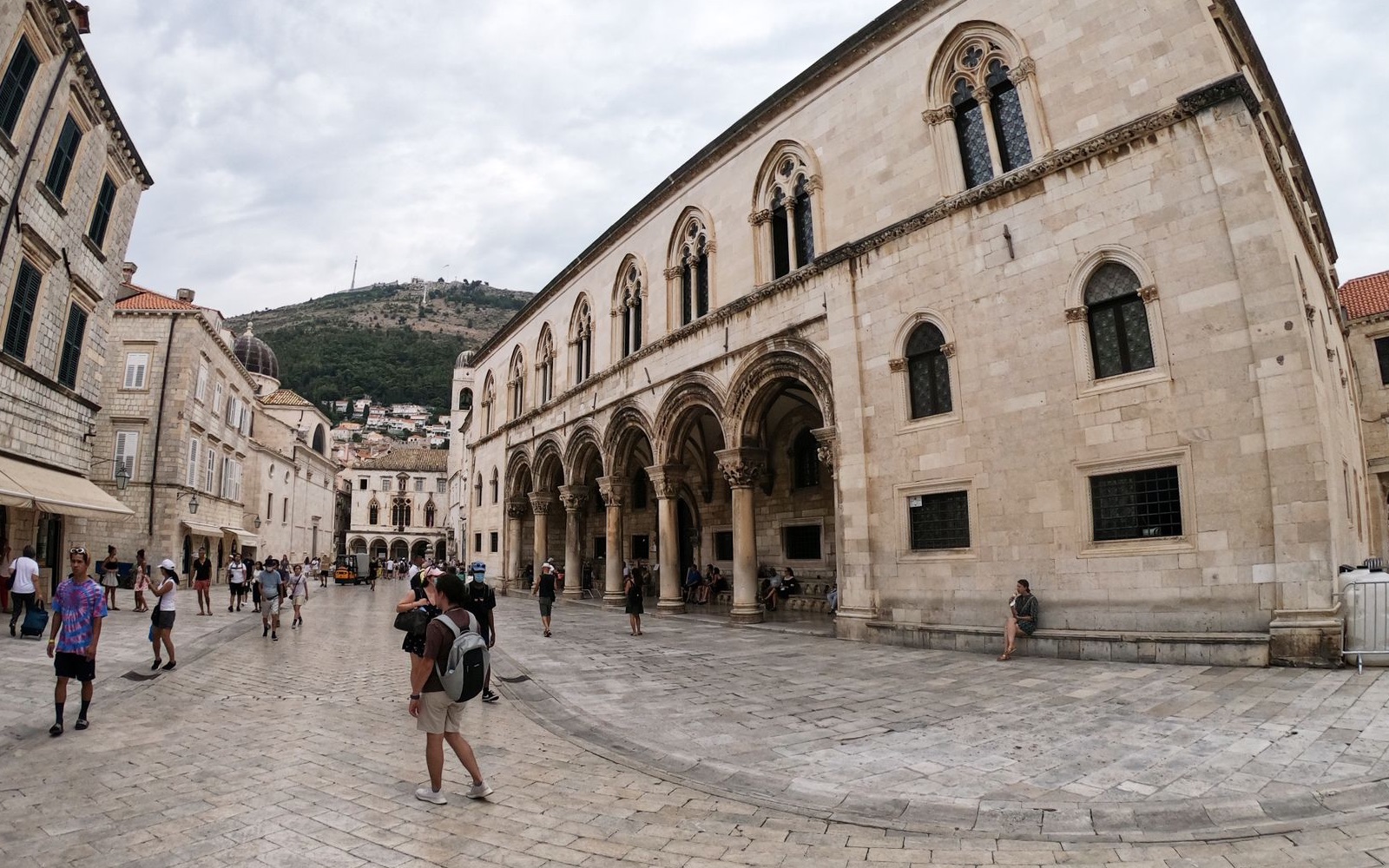
Reclaim your Croatian Heritage and obtain EU citizenship through your ancestors.
Croatia offers a citizenship by descent program that allows individuals with Croatian ancestry to reclaim their heritage and secure European Union citizenship. If you have a Croatian parent or grandparent who maintained their Croatian citizenship, you may be eligible to join thousands of descendants worldwide who have successfully obtained Croatian citizenship and EU passports.
Croatian citizenship by descent provides you with a gateway to the European Union, granting you the right to live, work, study, and retire anywhere across the EU's 27 member states, plus Switzerland. With a Croatian passport offering visa-free access to 184 destinations worldwide—representing 85% global reach—this citizenship represents one of the most valuable travel documents available.
The Croatian citizenship by descent program is rooted in Article 11 of the Croatian Citizenship Act, which recognizes descendants of Croatian emigrants who left before independence in 1991. Whether your ancestor emigrated from Croatia decades ago or your family maintained connections to Croatia throughout generations, this pathway offers a meaningful way to reconnect with your Croatian roots while securing substantial practical benefits.
CitizenX expertly handles your entire citizenship by descent application, simplifying complex Croatian laws and helping you prove your lineage by consulting various institutions and archives, all the way to receiving your Croatian passport—all without requiring any presence in Croatia. Our comprehensive $15,000 service manages the entire process remotely.
Must have Croatian ancestor (parent or grandparent) who was Croatian citizen
Ancestor must have permanently left Croatia before October 8, 1991
Ancestor must not have moved to another Yugoslav republic
Ancestor must not have returned to live in Croatia
No generational limit if documentation available (extended family lines possible)
Spouse Eligibility
Yes - Spouses of qualifying applicants are eligible for immediate citizenship by marriage with no residency requirement
Key Benefits
184 visa-free destinations (85% world access)
EU citizenship with right to live and work across 27 EU countries + Switzerland
Dual citizenship allowed without restrictions
Pass citizenship to future generations
Beautiful Adriatic coast and Mediterranean lifestyle
Growing economy and EU development
Processing Time
Approximately 24 months (applications can take 2+ years)
Physical Presence
No presence required in Croatia
Language Requirement
None for citizenship by descent
CitizenX Service Fee
$15,000 (comprehensive end-to-end service)
Dual Citizenship
Allowed without restrictions
Required Documents
From You: Passport, birth certificate, police records (no older than 6 months)
From Ancestors: Birth certificate, proof of Croatian citizenship, emigration proof
Connecting Documents: Birth/marriage certificates for each generation
Legal Basis
Article 11 of the Croatian Citizenship Act
What Is Croatian Citizenship by Descent?
Croatian citizenship by descent, known in Croatia as stjecanje hrvatskog državljanstva prirođenjem (or prirođenje for short), allows individuals to claim Croatian citizenship based on their lineage from Croatian ancestors who emigrated before Croatia's independence.
The legal foundation is Article 11 of the Croatian Citizenship Act, which provides that you qualify for citizenship if you have a direct ancestor who left Croatia before independence in 1991 without renouncing their citizenship. Importantly, that ancestor cannot have left on the "basis of an international agreement" or moved to a state that was also part of Yugoslavia at the time.
This pathway reflects Croatia's commitment to maintaining connections with its diaspora—the millions of Croats and their descendants who emigrated throughout the 20th century, particularly during periods of economic hardship under Austro-Hungarian rule, interwar Yugoslavia, communist rule, and the Yugoslav wars of the 1990s.
What makes Croatian citizenship by descent particularly valuable is Croatia's position as one of the EU's newest members (joined 2013) and its stunning Adriatic coastline. Croatian citizenship provides full EU rights while offering access to one of Europe's most beautiful countries, with its Mediterranean climate, historic coastal cities, and growing economy.
Understanding Yugoslav History and Croatian Citizenship
Croatia's complex 20th-century history is essential to understanding eligibility:
Pre-1918: Croatian lands were part of the Austro-Hungarian Empire
1918-1991: Croatia was part of various Yugoslav states:
Kingdom of Serbs, Croats and Slovenes (1918-1929)
Kingdom of Yugoslavia (1929-1941)
Independent State of Croatia under Axis occupation (1941-1945)
Socialist Federal Republic of Yugoslavia (1945-1991)
October 8, 1991: Croatia declared independence from Yugoslavia
1991-1995: Croatian War of Independence
2013: Croatia joined the European Union
The October 8, 1991 date is critical—it marks Croatia's independence and is the cutoff date for the emigrant citizenship program.
Who Qualifies for Croatian Citizenship by Descent?
To qualify for Croatian citizenship by descent, you must have a Croatian ancestor connected to you in a direct line who permanently left Croatia to live abroad before independence.
Eligible Descendants
Croatian citizenship by descent is available to:
Children of Croatian citizens
Grandchildren of Croatian citizens
Great-grandchildren of Croatian citizens (thanks to a rule effective January 2020 removing generational limits)
More distant descendants as long as you can prove the connection and their emigration abroad
No Generational Limit: Since January 2020, there is no formal limit to how many generations back you can go, provided you can prove the connection and your ancestor's emigration abroad. This makes Croatia one of the more generous European countries for ancestry-based citizenship.
Qualifying Ancestor Requirements
Your Croatian ancestor must meet all of the following conditions:
Left Croatia Before October 8, 1991
Your ancestor must have permanently moved abroad before Croatia declared independence on October 8, 1991. This is the most critical date in Croatian citizenship law.
Was a Croatian Emigrant
Your ancestor must be considered a "Croatian emigrant" under the law—meaning they left Croatian territory to live permanently abroad.
Did Not Move to Another Yugoslav Republic
Your ancestor must NOT have left Croatia to move to another country within Yugoslavia (Serbia, Bosnia and Herzegovina, Slovenia, Montenegro, Macedonia/North Macedonia). Movement within Yugoslavia does not qualify as emigration for citizenship purposes.
Did Not Return to Croatia
Your ancestor must not have returned to live in Croatia after emigrating. If they went abroad but later came back to Croatia permanently, they are not considered emigrants.
Did Not Renounce Citizenship
Your ancestor must not have formally renounced their Croatian/Yugoslav citizenship through official channels.
Special Provision: Spouses
Unique Advantage: If you qualify for Croatian citizenship by descent, your spouse is also eligible for immediate Croatian citizenship by marriage with NO residency requirement.
This is an exceptional benefit not offered by most European descent programs. Typically, spouses must pursue separate naturalization requiring years of residence. Croatia's program allows couples to obtain citizenship together.
Who Born on Croatian Territory May Also Qualify
If you are a Croatian born on Croatian territory who permanently moved abroad before 1991, you may also qualify to reclaim citizenship under this provision.
Important Disqualifications for Croatian Citizenship by Descent
You may be disqualified from Croatian citizenship by descent if your ancestor:
Moved Within Yugoslavia
Disqualification: Your ancestor left Croatia to move to another country within Yugoslavia or former Yugoslavia (Serbia, Bosnia and Herzegovina, Slovenia, Montenegro, Macedonia)
Why: Movement between Yugoslav republics was internal migration, not emigration. The law specifically requires emigration outside of Yugoslavia.
Emigrated After October 8, 1991
Disqualification: Your ancestor left Croatia after October 8, 1991 (after independence)
Why: The program is specifically for pre-independence emigrants and their descendants. Post-independence emigrants follow different citizenship rules.
Returned to Croatia
Disqualification: Your ancestor returned to live in Croatia after emigrating
Why: Returning to live in Croatia means they were no longer emigrants. The program is for those who permanently settled abroad.
Emigrated on Basis of International Agreement
Disqualification: Your ancestor left Croatia on the basis of an international agreement
Why: Certain population exchanges and organized emigrations under international treaties are excluded from the emigrant citizenship program.
You Are a Croatian Emigrant Who Moved to Another Yugoslav State
Disqualification: If you yourself are a Croatian emigrant who moved to another country within Yugoslavia
Why: Same principle—movement within Yugoslavia doesn't qualify.
You Are a Croatian Emigrant Who Left After October 8, 1991
Disqualification: If you yourself are a Croatian emigrant who left Croatia after October 8, 1991
Why: Post-independence emigrants follow different rules.
You Returned to Croatia as an Emigrant
Disqualification: If you were a Croatian emigrant but returned to live in Croatia
Why: Returning terminates emigrant status.
Understanding the October 8, 1991 Cutoff Date
The October 8, 1991 date is absolutely critical to Croatian citizenship by descent eligibility.
Why This Date Matters
On October 8, 1991, Croatia formally declared independence from Yugoslavia. This marked the birth of the modern Croatian state and the beginning of Croatian citizenship as distinct from Yugoslav citizenship.
The citizenship by descent program (Article 11) was designed specifically for:
Croats who left during Austro-Hungarian rule
Croats who left during the various Yugoslav periods
Pre-independence emigrants and their descendants
The cutoff ensures the program serves its intended purpose: reconnecting with the historical diaspora, not creating a pathway for recent emigrants.
Timeline Examples
Qualifies:
Ancestor left Croatia in 1950 → Qualifies (before Oct 8, 1991)
Ancestor left Croatia in 1985 → Qualifies (before Oct 8, 1991)
Ancestor left Croatia in early 1991 → Qualifies (before Oct 8, 1991)
Does Not Qualify:
Ancestor left Croatia in late 1991 → Does NOT qualify (after Oct 8, 1991)
Ancestor left Croatia in 1995 → Does NOT qualify (after Oct 8, 1991)
Ancestor left Croatia in 2000 → Does NOT qualify (after Oct 8, 1991)
Croatian Emigration History
Major Croatian Emigration Waves
Understanding Croatian emigration patterns helps explain why millions of people worldwide may qualify for citizenship:
Late 19th/Early 20th Century (1880s-1914):
Mass emigration from Croatian lands (then part of Austria-Hungary) to:
United States - Particularly Pennsylvania, Ohio, Illinois, California, Louisiana (Croats worked in mining, industry, fishing)
South America - Argentina, Chile (significant Croatian communities)
Australia and New Zealand
Canada
Economic hardship and limited opportunities under Austro-Hungarian rule drove hundreds of thousands to leave.
Interwar Period (1918-1941):
After formation of Kingdom of Yugoslavia, continued economic emigration to Americas, particularly United States and South America.
Post-World War II Communist Era (1945-1991):
Under Tito's communist Yugoslavia:
Political emigrants fleeing communism
Economic emigrants seeking better opportunities
Croatian nationalists escaping political persecution
Refugees from political purges
Many settled in Western Europe, North America, South America, and Australia.
Croatian War of Independence (1991-1995):
During the war, hundreds of thousands were displaced, though this is after the October 8, 1991 cutoff for the descent program.
Global Croatian Diaspora
Estimated Croatian Diaspora: 2-4 million people worldwide (Croatia's current population is about 4 million)
Major Croatian Communities:
North America:
United States: 400,000-1 million Croatian Americans (concentrated in Pennsylvania, Ohio, Illinois, California)
Spouse's information (if relevant to citizenship chain)
Connecting Generational Documents
Complete Chain of Birth and Marriage Certificates:
You must provide birth certificates and marriage certificates for each generation connecting you to your Croatian ancestor.
If Claiming Through Grandparent:
Your parent's birth certificate
Your parent's marriage certificate (if applicable)
Your grandparent's marriage certificate (if applicable)
If Claiming Through Great-Grandparent:
Your parent's birth certificate and marriage certificate
Your grandparent's birth certificate and marriage certificate
Your great-grandparent's marriage certificate (if applicable)
Each link in the chain must be documented to prove direct lineal descent.
Additional Supporting Documents
Helpful Documentation:
Family Tree - Visual diagram showing your relationship to Croatian ancestor
Biographical Outline - Written narrative explaining why you want Croatian citizenship (must be in Croatian)
Proof of Current Address - Utility bill, lease agreement, or similar
Family Documents - Letters, photographs, family records supporting your claim
Document Requirements
Authenticity:
All documents must be original or certified copies
Foreign documents must be apostilled or legalized from issuing country
Documents must be officially translated into Croatian by certified translators (unless covered by bilateral agreements)
Currency:
Police records must be no older than 6 months
Other documents should be as recent as possible where applicable
Format:
Proper apostille stamps and signatures
Certified translations with translator's credentials
Clear, legible copies
How to Apply for Croatian Citizenship by Descent with CitizenX
CitizenX expertly handles your entire citizenship by descent application, simplifying complex Croatian laws and helping you prove your lineage by consulting various Croatian institutions and archives, all the way to receiving your Croatian passport—without requiring any presence in Croatia.
Step 1: Eligibility Assessment and Consultation
Initial Evaluation
Your journey begins with a comprehensive eligibility assessment. CitizenX's Croatian citizenship experts will:
Review your family history and Croatian ancestry
Identify your qualifying Croatian ancestor(s)
Determine whether your ancestor's emigration qualifies under Article 11
Verify the October 8, 1991 emigration date requirement
Assess whether any disqualifications apply
Evaluate spouse and family eligibility
Provide realistic timeline expectations
Deliver complete cost breakdown
Key Questions We Address:
When did your ancestor leave Croatia?
Where did they emigrate to?
Did they move within Yugoslavia or outside Yugoslavia?
Did they ever return to Croatia?
Do you have sufficient documentation?
Does your spouse want to apply simultaneously?
Preliminary Research:
We conduct initial research to:
Locate your ancestor in Croatian records
Identify which archives likely hold relevant documents
Assess documentation availability
Determine potential challenges
Step 2: Document Collection and Archival Research
Croatian Archival Research:
CitizenX's team accesses Croatian archives and institutions to locate your ancestor's documents:
Archives and Offices We Access:
Croatian State Archives (Hrvatski drĹľavni arhiv)
Municipal Registries (MatiÄŤni uredi) - Local civil registration offices throughout Croatia
Church Archives - Catholic, Orthodox, and other denominational records
Regional Archives - County and city archives across Croatia
Croatian Government Databases - Citizenship and vital records databases
Documents We Search For:
Croatian birth certificates
Croatian citizenship documents (domovnica)
Croatian identity cards
Marriage and death certificates
Emigration records
Property records
Military records
School records
Why Professional Research Is Essential:
Croatian bureaucracy can be challenging to navigate
Records are scattered across multiple offices and archives
Croatian language proficiency required
On-the-ground presence often necessary
Relationships with archivists facilitate access
Understanding of Croatian administrative structure essential
Foreign Document Collection:
Simultaneously, CitizenX assists you in gathering documents from your country:
Your personal documents (passport, birth certificate)
Police background check (must be under 6 months old)
Parents' and grandparents' vital records
Emigration records from destination country
Naturalization records (if applicable)
Any family documents supporting your claim
Step 3: Proof of Emigration
Critical Requirement:
You must prove your ancestor permanently emigrated from Croatia before October 8, 1991.
Emigration Evidence We Help Obtain:
Ship Manifests and Passenger Lists:
Records from Croatian/Yugoslav ports (Rijeka, Split, Dubrovnik)
Ellis Island records (for U.S. immigration)
Other port of entry records
Immigration Records:
U.S. immigration documents
Canadian immigration records
Australian immigration documents
South American immigration records
Death Certificates:
Showing death outside Croatia proves emigration and non-return
Naturalization Records:
Documents showing ancestor became citizen of destination country
Usually obtained from destination country's archives
Other Evidence:
Employment records from abroad
Property records showing residence outside Croatia
Census records from destination country
Military service records from destination country
Step 4: Document Authentication and Translation
Apostille and Legalization:
All foreign documents must be properly authenticated:
Apostille for countries party to Hague Convention
Legalization through consular channels for other countries
We coordinate obtaining proper authentication for each document
Official Croatian Translation:
All documents not in Croatian must be officially translated:
Translations must include official stamps and certifications
Translations must be faithful to original documents
We coordinate with qualified Croatian translation services
Quality Control:
Verification all documents properly apostilled/legalized
Ensuring translations complete and accurate
Confirming all certifications present
Organizing documents in proper format for submission
Step 5: Application Preparation
Comprehensive Application Package:
CitizenX prepares your complete Croatian citizenship application:
Required Forms:
Application Form (Obrazac 1, 2, or 3) - Depends on your specific situation
All forms completed in Croatian language
Proper signatures and notarizations
Biographical Statement:
Written explanation of why you want Croatian citizenship
Must be in Croatian language
Outlines your connection to Croatia and emigrant ancestor
Complete Documentation Package:
All required personal documents (apostilled and translated)
Complete generational chain documentation
Proof of ancestor's Croatian citizenship
Proof of ancestor's emigration
Police background check (under 6 months old)
Family tree diagram
Index of all supporting documents
Spouse Application (if applicable):
If your spouse is applying for citizenship by marriage:
Spouse's complete documentation package
Marriage certificate
Proof of your qualifying relationship
Legal Analysis:
Our legal experts:
Review all documentation for completeness
Address any potential complications
Prepare legal arguments supporting your claim
Ensure compliance with all Croatian requirements
Step 6: Application Submission
Submission Options:
Croatian citizenship by descent applications are submitted:
If You Have Legal Residence in Croatia:
Submit at nearest MUP (Ministry of Interior) administrative police station
In-person submission required (or through authorized representative)
If Applying From Abroad:
Submit at nearest Croatian consulate or embassy
In-person submission typically required (or through legal representative/proxy)
Legal Representative:
If you are disabled or unable to submit in person:
Authorized proxy can submit on your behalf
Power of attorney required
We can coordinate legal representation if needed
CitizenX Coordination:
We manage the submission process:
Scheduling appointments at Croatian consulates
Preparing all materials for submission
Coordinating with legal representatives if needed
Ensuring proper filing and receipt confirmation
Obtaining submission confirmation and case number
Step 7: Government Processing
Processing Timeline:
Croatian citizenship by descent applications have especially long processing times:
Official Timeline: 24 months (approximately 2 years)
Reality: Many applications take 2+ years
Processing abroad can take even longer than domestic applications
During Processing:
Croatian Ministry of Interior (MUP):
Verifies all submitted documentation
Conducts their own archival research if needed
Confirms ancestor's Croatian citizenship
Verifies emigration before October 8, 1991
Checks for disqualifying factors
Reviews background checks
May request additional documentation
CitizenX Support Throughout Processing:
Monitor application status with Croatian authorities
Respond immediately to any requests for additional documentation
Provide regular updates on processing progress
Handle all communications with Croatian MUP
Troubleshoot any issues that arise
Keep you informed throughout the 2+ year timeline
Communication:
All official communications with Croatian authorities are in Croatian. CitizenX handles all correspondence, translation, and interpretation on your behalf.
Step 8: Citizenship Approval and Croatian Documents
Citizenship Decision:
Upon approval, you'll receive:
Decision on Admission to Croatian Citizenship:
Rješenje o primitku u hrvatsko državljanstvo
Official decision document confirming citizenship
Your citizenship begins the day you receive this decision
Important: If your application is denied, you have 30 days to submit a complaint (tuĹľba) to the administrative court. CitizenX can assist with appeals if needed.
Obtaining Croatian Identity Documents:
Once citizenship is granted, you can apply for Croatian documents in this order:
Affordable cost of living (lower than Western Europe)
Growing economy and development
UNESCO World Heritage sites
Strategic Location:
Bridge between Central and Southern Europe
Access to Balkans, Italy, Austria, Slovenia
Growing tourism industry
EU development funding and infrastructure projects
Passing Citizenship to Future Generations
Croatian citizenship automatically passes to your children:
Children Born After Citizenship: Children born after you obtain Croatian citizenship are automatically Croatian citizens by birth, regardless of where they're born.
Children Born Before Citizenship: Children born before you obtained citizenship can apply for Croatian citizenship as your descendants once your citizenship is confirmed.
Multi-Generational Asset: Croatian citizenship creates lasting value for your family, providing options and opportunities for generations to come throughout the European Union.
Dual Citizenship
Croatia fully allows dual citizenship without restrictions:
You can maintain your current citizenship while holding Croatian citizenship
Croatia will never require you to renounce other citizenships
Obtaining Croatian citizenship will not affect your existing citizenship (verify your country's laws)
You can hold multiple passports simultaneously
Your children can inherit Croatian citizenship alongside any other citizenship
Most Western democracies (U.S., Canada, UK, Australia) allow dual citizenship and are compatible with Croatian citizenship.
Living in Croatia
Many descendants who obtain Croatian citizenship eventually choose to visit or live in Croatia:
Relocating to Croatia:
No visa or work permit required
Can establish residence immediately
Access to housing market
Ability to start businesses
EU tax and regulatory environment
Retirement in Croatia:
Affordable Mediterranean lifestyle
Excellent healthcare
Beautiful coastal and island locations
Welcoming communities
Lower cost of living than Western Europe
Visiting and Tourism:
Explore your ancestral homeland
Connect with Croatian culture and heritage
Enjoy Croatian cuisine, wine, and traditions
Visit family regions and ancestral villages
Access to Croatian islands and national parks
Why Choose CitizenX for Your Croatian Citizenship by Descent Application?
Expert Navigation of Complex Croatian Law
Croatian citizenship by descent involves intricate requirements, particularly:
The critical October 8, 1991 cutoff date
Understanding Yugoslav history and territorial changes
Distinguishing emigration from Yugoslavia vs. movement within Yugoslavia
Navigating complex disqualification scenarios
Proving emigration and non-return
CitizenX's team specializes in Croatian citizenship law and understands all the nuances.
Croatian Archival Research Expertise
On-the-Ground Access:
CitizenX maintains relationships with:
Croatian State Archives
Municipal registries (matiÄŤni uredi) across Croatia
Church archives throughout Croatia
Regional and local archives
Croatian government offices
Language and Cultural Knowledge:
Native Croatian speakers on staff
Understanding of Croatian administrative systems
Relationships with Croatian archivists and officials
Knowledge of regional variations in record-keeping
Genealogical Expertise:
Experience tracing Croatian family lines
Understanding of Croatian naming conventions
Knowledge of historical territorial boundaries
Ability to locate records in scattered archives
Comprehensive Document Procurement
We obtain difficult-to-find documents:
From Croatia:
Birth certificates from Croatian registries
Citizenship documents (domovnica)
Emigration records
Church records
Historical documents
From Abroad:
Immigration and ship manifest records
Naturalization documents
Death certificates from destination countries
Census records
Spouse Citizenship Coordination
Unique Advantage:
If you qualify, your spouse can obtain Croatian citizenship simultaneously with no residency requirement. CitizenX manages both applications together:
Coordinated application preparation
Spouse documentation
Marriage certificate verification
Simultaneous submission
Both citizens at same time
This exceptional benefit means couples can obtain EU citizenship together.
No Presence Required - 100% Remote Process
Complete Online Service:
Never need to visit Croatia
All archival research conducted by Croatian team
All communications handled remotely
Document submission coordinated through consulates
Application managed without travel
Perfect for busy professionals, families, or anyone unable to travel to Croatia.
End-to-End Service Through Long Timeline
Support Through 24+ Month Process:
Croatian applications take 2+ years. CitizenX provides:
Dedicated support throughout entire timeline
Regular status updates
Immediate response to government requests
Patient guidance through long processing
Advocacy with Croatian authorities
Proven Track Record
CitizenX has successfully helped thousands of clients obtain citizenship through descent programs across Europe. Our expertise in Croatian citizenship law and relationships with Croatian authorities ensure your application is prepared to the highest standards.
Common Challenges and How CitizenX Addresses Them
Challenge: Proving Emigration Before October 8, 1991
The Issue:
The October 8, 1991 cutoff is absolute. Applicants must definitively prove their ancestor left Croatia before this date, which can be challenging if emigration occurred decades earlier.
CitizenX Solution:
Comprehensive search for emigration records (ship manifests, port records)
Death certificates showing death outside Croatia before 1991
Immigration records from destination countries
Naturalization records with dates
Census records from destination countries
Employment or military records from abroad
Multiple forms of evidence to establish emigration timeline
Challenge: Distinguishing Yugoslav Internal Migration from Emigration
The Issue:
Movement from Croatia to Serbia, Bosnia, Slovenia, or other Yugoslav republics does NOT qualify as emigration. Applicants must prove ancestor left Yugoslavia entirely, not just Croatia.
CitizenX Solution:
Careful research into ancestor's destination
Immigration records showing entry to non-Yugoslav country
Understanding of Yugoslav political boundaries
Documentation proving residence outside all Yugoslav territories
Expert analysis of emigration circumstances
Challenge: Long Processing Times
The Issue:
Croatian citizenship applications take 24+ months (2+ years), creating uncertainty and requiring patience.
CitizenX Solution:
Clear timeline expectations set upfront
Regular communication and updates
Proactive monitoring of application status
Immediate response to any government requests
Patient support throughout the long process
Realistic planning for 2+ year timeline
Challenge: Missing Croatian Documents
The Issue:
Croatian birth certificates, citizenship documents, or emigration records from pre-1991 may be difficult to locate, especially for ancestors from smaller towns.
CitizenX Solution:
On-the-ground researchers throughout Croatia
Access to municipal registries in towns and villages
Church archive research when civil records unavailable
Regional archive access
Alternative documentation strategies
Reconstruction from multiple sources
Challenge: Proving Non-Return to Croatia
The Issue:
Applicants must prove ancestor never returned to live in Croatia after emigrating, which can be challenging to document negatively.
CitizenX Solution:
Death certificates showing death outside Croatia
Continuous residence evidence from destination country
Name changes, adoptions, divorces, remarriages, and gaps in documentation can complicate proving the generational chain.
CitizenX Solution:
Expert genealogical analysis
Experience with complex family situations
Multiple forms of evidence for relationships
Legal documentation of adoptions (if as minors)
Explanatory narratives addressing complications
Alternative documentation strategies
Frequently Asked Questions
Can I get Croatian citizenship through my grandparents?
Yes, you can obtain Croatian citizenship through your grandparents, provided they were Croatian citizens who permanently emigrated from Croatia before October 8, 1991, and didn't move to another Yugoslav republic or return to Croatia. You'll need to prove the unbroken generational chain from your grandparent through your parent to you.
What if my ancestor emigrated in the 1950s from Croatia but died in the 1990s?
As long as your ancestor emigrated before October 8, 1991 and never returned to live in Croatia, you likely qualify. The date of death doesn't matter—what matters is when they emigrated and whether they stayed abroad.
Can my spouse get Croatian citizenship through my application?
Yes! This is one of Croatian citizenship by descent's unique advantages. If you qualify for citizenship by descent, your spouse is eligible for immediate Croatian citizenship by marriage with NO residency requirement. CitizenX can coordinate both applications simultaneously.
Do I need to speak Croatian to get citizenship by descent?
No, there is no language requirement for Croatian citizenship by descent. Unlike naturalization programs requiring Croatian language proficiency, descent-based citizenship is a recognition of citizenship through your ancestry. CitizenX handles all Croatian-language communications with authorities.
How long does the Croatian citizenship process take?
Approximately 24 months (2 years) from application submission to citizenship approval, though many applications take even longer. Applications processed through consulates abroad can take longer than domestic applications. The long timeline requires patience, but CitizenX provides support throughout.
Can I hold dual citizenship with Croatia?
Yes, Croatia allows dual citizenship without restrictions. You can maintain your current citizenship while obtaining Croatian citizenship. Croatia won't require you to renounce any other citizenship. Verify your current country's dual citizenship laws (most Western democracies allow it).
What if my ancestor left Croatia to move to Serbia?
Unfortunately, movement from Croatia to another Yugoslav republic (Serbia, Bosnia and Herzegovina, Slovenia, Montenegro, Macedonia) does NOT qualify as emigration for citizenship purposes. Your ancestor must have left Yugoslavia entirely and settled in a non-Yugoslav country.
Do I need to visit Croatia to apply?
No, the process is handled remotely. Applications can be submitted through Croatian consulates in your country of residence. CitizenX's 100% online service means you never need to visit Croatia—we coordinate all archival research, document collection, and submission remotely.
What if I can't find my ancestor's Croatian birth certificate?
Missing Croatian documents are common, especially for older records. CitizenX's Croatian research team specializes in locating documents through:
Municipal registries throughout Croatia
Church archives (Catholic, Orthodox)
Regional archives
Alternative documentation sources
Reconstruction from multiple records
Our on-the-ground researchers can access archives that individuals typically cannot.
Will my children automatically become Croatian citizens?
Children born after you obtain Croatian citizenship are automatically Croatian citizens by birth, regardless of where they're born. Children born before you obtained citizenship can apply for Croatian citizenship as your descendants once your citizenship is confirmed.
How much does Croatian citizenship by descent cost?
CitizenX's service fee is $15,000, which includes:
Complete eligibility assessment
Croatian archival research and document procurement
Foreign document collection assistance
Document authentication, apostille, and translation
Application preparation and submission
Support throughout 24+ month processing
Croatian passport assistance
Spouse application coordination (if applicable)
Government fees (birth certificates, passports, etc.) are additional but minimal.
What's the difference between Croatian citizenship by descent and naturalization?
Citizenship by Descent (Article 11):
Based on ancestry from pre-1991 emigrants
No residence in Croatia required
No language requirement
Spouse can apply simultaneously
24+ month timeline
Naturalization:
Requires living in Croatia for years
Croatian language requirement
Citizenship test
Different application process
For those without qualifying ancestry
Why does Croatia allow citizenship for descendants of emigrants?
Croatia recognizes its vast diaspora (2-4 million worldwide) and maintains that descendants of Croatian emigrants remain part of the Croatian nation. The program honors the historical emigration that occurred under Austro-Hungarian rule, Yugoslav periods, and communist era, allowing descendants to reconnect with their heritage.
Ready to reclaim your Croatian heritage? Contact CitizenX to begin your eligibility assessment and start your journey to EU citizenship and life on the Adriatic.
184 visa-free countries. No presence required. Spouse eligible with no residency requirement.